Why Death Valley Belongs on Your World Cup Itinerary
An estimated 1.24 million international fans are expected to fly in for the 2026 World Cup, see one or two cities, and fly home with the same impression of the American West they arrived with. That’s a missed trip.
The American West is defined by its landscapes. They’re the reason people who live here stay. And no single landscape captures that spirit more completely — or more strangely — than Death Valley.
A few things to know:
- It’s the hottest, driest, lowest place in North America. Furnace Creek, at the heart of the park, sits at 190 feet (58 meters) below sea level.
- It’s the largest national park in the contiguous United States. More than 3.4 million acres (1.4 million hectares).
- It’s one of the largest International Dark Sky Parks on Earth. The night sky here holds coveted Gold Tier Dark Sky status — an entirely different class of stargazing.
- It’s the homeland of the Timbisha Shoshone, whose history in this valley spans thousands of years.
- And it has, in the middle of all that, a real oasis — spring-fed water, palms, and shade, in a place that seems like it should have none.
If you’ve never been to the American West before, this is the West at its most surreal.. If you have, this is the part of it you probably haven’t seen.
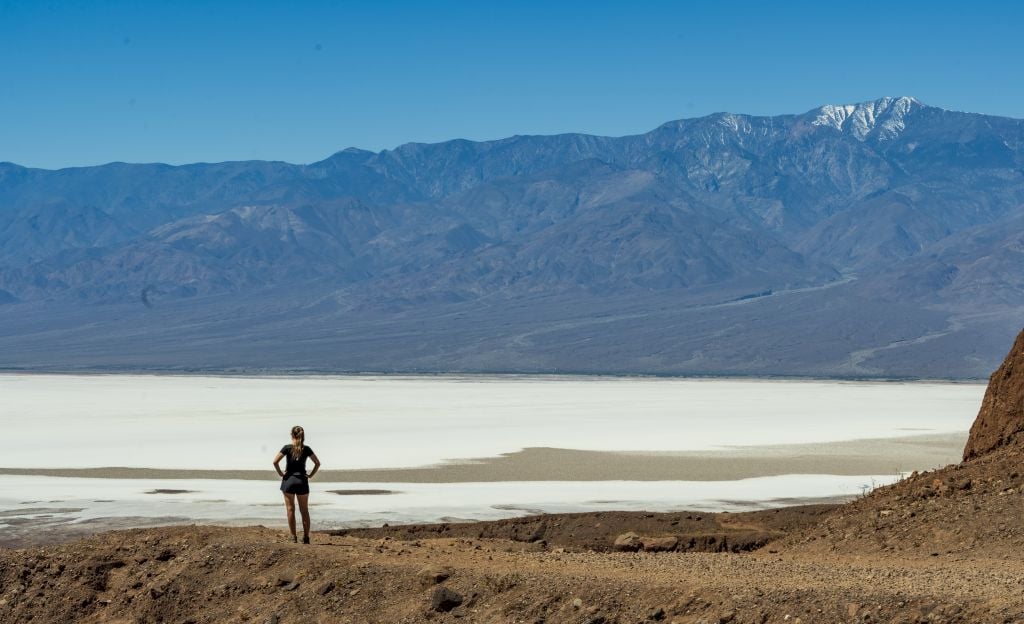
The Honest Truth: Yes, It’s Going to be Hot
Death Valley in June and July is the hottest place in the country. Highs at Furnace Creek average around 110°F (43°C) in June and 113°F (45°C) in July, and often climb even higher. Lows stay above 80°F (27°C) at night.
We are not going to pretend otherwise. The heat is part of why this place is what it is. The salt flats exist because of it. The sailing stones exist because of it. The fact that an oasis can thrive here at all — water, palms, green grass — feels remarkable because of the desert that surrounds it.
What changes in summer is how you visit. You become an early-morning and evening traveler.
- Sunrise starts the day: Around 5:30 AM, you’re up at first light. Zabriskie Point is beautiful in any season, but in summer, the first hour of the day is everything.
- Mornings are for exploring the park: Dunes, salt flats, canyon drives, viewpoints are best experienced from sunrise through late morning, while the air is still moving and the light is soft
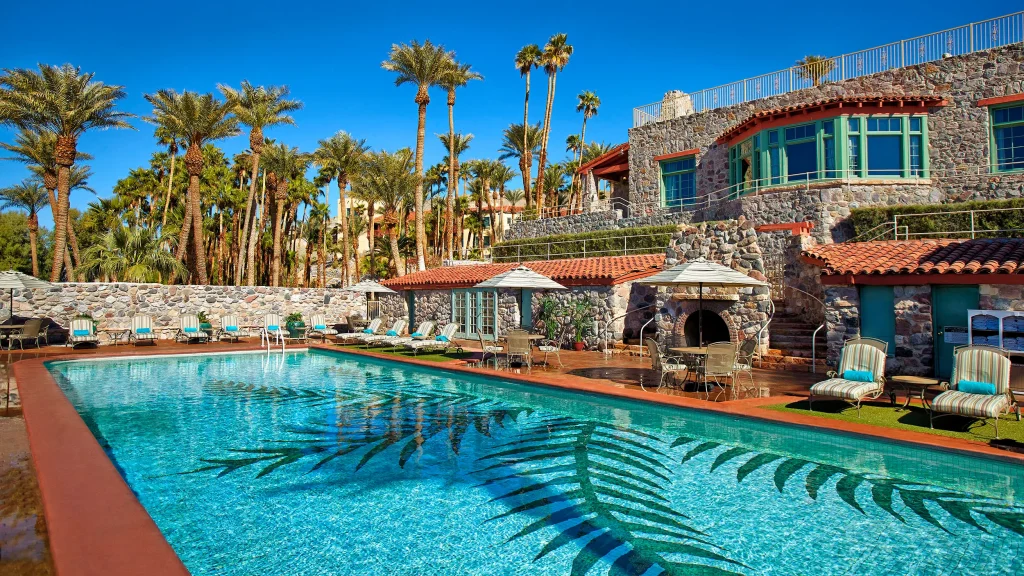
- Midday is for the pool: The spring-fed pool at The Ranch (and the second poll at the Inn) holds at 87°F (31°C) no matter how intense the temperature gets. So does the date palm shade. So does The Inn Dining Room. Bring a good book you can really dive into.
- Evenings are for sunset and stars: The sun drops behind the Panamint Mountains around 8:00 PM, and what follows is one of the longest stretches of dark-sky viewing in any U.S. national park.
Summer in Death Valley is not a packed-itinerary trip. It is a slower, curious, more cinematic kind of travel — and for someone who has just spent three days in a host city of seventy thousand people, that may be exactly the point.
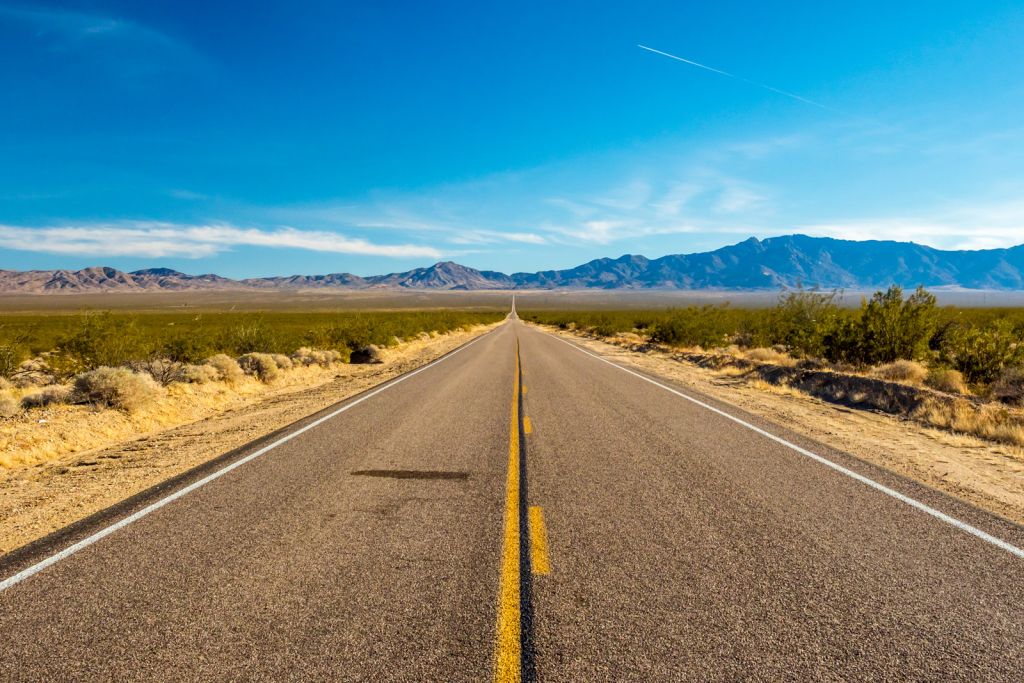
How to Pair Death Valley With Your World Cup Match
The driving math matters here. Two of the three western host cities are real candidates for a Death Valley add-on. One is a stretch. Here’s the honest breakdown.
Los Angeles (SoFi Stadium) — the most natural fit
SoFi Stadium hosts more 2026 World Cup matches than any other western venue, including Team USA’s opener against Paraguay on June 12, the third group-stage match against Türkiye on June 25, and a Quarterfinal on July 11. If your match is in LA, Death Valley is by far the easiest national park extension to add.
The drive: Roughly 4.5 to 5 hours, about 260 miles (420 km), from central LA to Furnace Creek. You have two route options — the scenic Highway 14 / U.S. 395 route through the Eastern Sierra, or I-15 north toward Baker. Either way, the road trip is part of the experience.
The shape of the visit: A three-night, four-day add-on is ideal. Leave the morning after your match, spend three nights at The Oasis, and drive back. without feeling rushed.
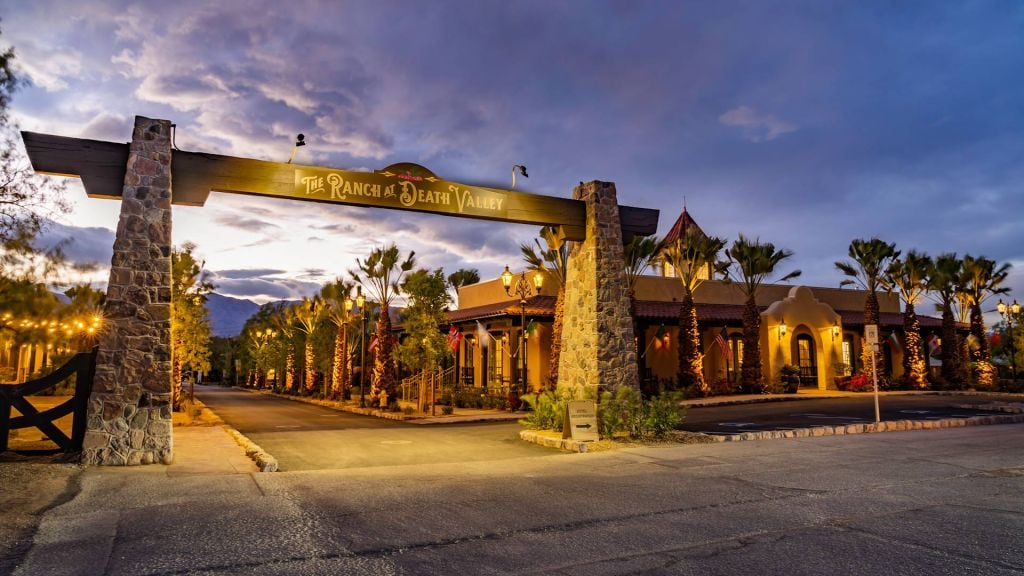
Where to stay: The Ranch at Death Valley is the best choice for summer. It’s family-friendly, within walking distance to the National Park Visitor Center, has a town square with restaurants and an ice cream parlor, an 18-hole golf course, and a spring-fed pool. The Inn at Death Valley — the historic Four Diamond half of the property — also stays open in summer if you want something quieter and more refined.
Las Vegas — not a host city, but the smartest base
While Las Vegas isn’t hosting any World Cup matches, more fans will fly through LAS for this tournament than you’d guess. Cheap connections. Big sportsbooks. Watch parties for every match in every group. And the closest major airport to Death Valley.
The drive: About 2 to 2.5 hours, 120 miles (193 km). Take NV-160 west through Pahrump, then CA-190 into the park.
If you’re attending matches at SoFi, one smart option is to take a quick budget flight from Las Vegas → LA in under an hour, see the match, then return to Vegas as your pre- or post-match decompression base. That turns the Death Valley leg into a two-hour drive instead of a five-hour one.
This is the move for fans coming from outside North America who want to see one or two matches and see a real piece of the American West without spending the whole trip in transit.
San Francisco Bay Area (Levi’s Stadium) — possible, but plan for it
Levi’s Stadium in Santa Clara will host five group-stage matches and a Round of 32 fixture in the 2026 World Cup. Death Valley is reachable from the Bay Area, but trip is long— about eight hours in summer, through the Sierra and with park-access considerations along the way.
The better option if your match is at Levi’s: Skip the drive. Fly SFO or SJC into LAS, rent a car at the Las Vegas airport, and drive two hours to Furnace Creek. Stay three nights at The Oasis, drive back to Vegas, and fly out. You’ll save a full day of windshield time in each direction and spend that time actually seeing the park instead.
Seattle (Lumen Field) — fly south for it
Lumen Field will host four group-stage matches — including USA vs. Australia on June 19 — plus a Round of 32 and a Round of 16. Driving from Seattle to Death Valley isn’t realistic. If you’re a Lumen fan with a few days between matches, fly SEA → LAS —about 2.5 hours nonstop—then drive two hours to Furnace Creek. Logistically, it’s a longer add-on to your travels, but it can still fit inside a four- or five-day window. And if you want a national park experience that feels truly otherworldly, Death Valley delivers something almost nowhere else in the Lower 48 can.
What You’ll Actually Do in the Park
Mornings, evenings, nights. That’s the rhythm in summer. Here is where to spend your time.
Sunrise (5:30 – 8:00 AM)
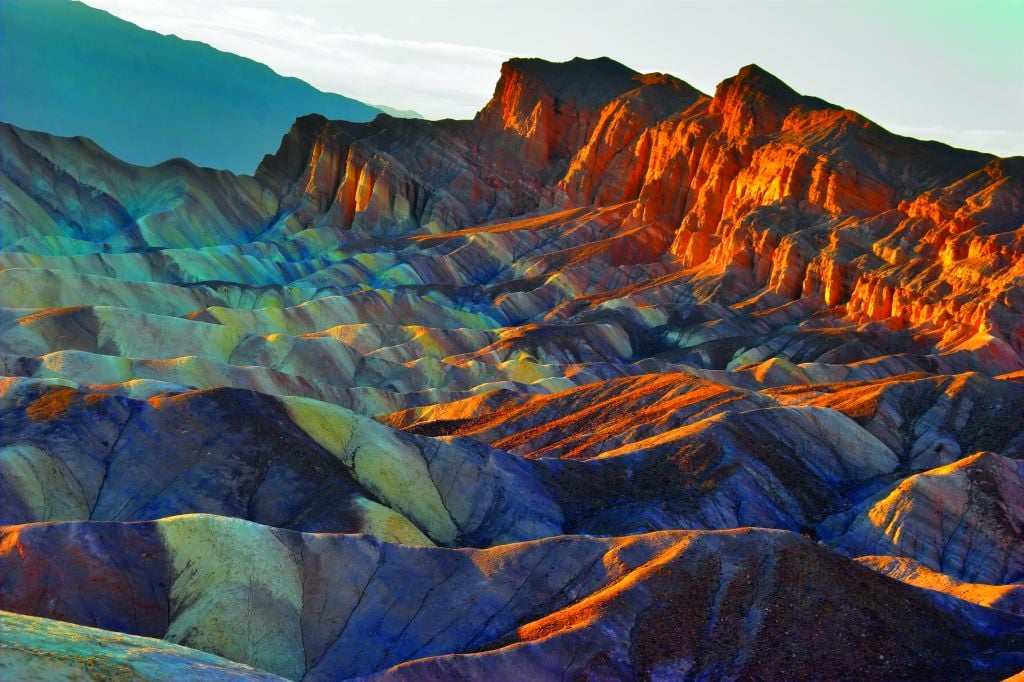
- Zabriskie Point. Six minutes from The Inn. The badlands light up gold and pink as the sun crests the Funeral Mountains behind you. This is the photograph you came for.
- Mesquite Flat Sand Dunes. Cool sand at sunrise, ripples and shadows in every direction, easy walking before the heat arrives.
Badwater Basin. The salt flats at 282 feet (86 meters) below sea level. Best in the long light of morning, when the hexagonal salt polygons throw shadows you can read. - Artist’s Drive. A 9-mile (14 km) one-way loop through mineral-streaked hills — pinks, greens, purples baked into the rock by ancient volcanic chemistry.
Late morning to mid-afternoon (the pool hours)
- Spring-fed pools. Open from sunrise. 87°F (31°C) year-round, fed by the natural spring that the entire resort is built around.
- Date palm gardens. Walkable, shaded, full of birds. The original 1920s plantings still drop fruit every fall.
- The Borax Museum. Small, free, hand-built. The twenty-mule team story is genuinely worth twenty minutes.
- The Inn at Death Valley Dining Room. Lunch on the terrace looking out across the salt pans to the Panamints.
Sunset and after (7:00 PM – late)
- Dante’s View. A 13-mile (21 km) paved drive up to 5,475 feet (1,669 meters) of elevation. Cooler air, and the entire valley laid out below you with the salt flats turning copper in the last light.
- Mesquite Flat Sand Dunes, second visit. The dunes at sundown are a different place than the dunes at sunrise. Worth both.
- Stargazing at Harmony Borax Works or anywhere off-road past the resort lights. Death Valley is one of the largest International Dark Sky Parks on Earth. The Milky Way runs corner to corner from late June onward.
One more, if you have a day to spare
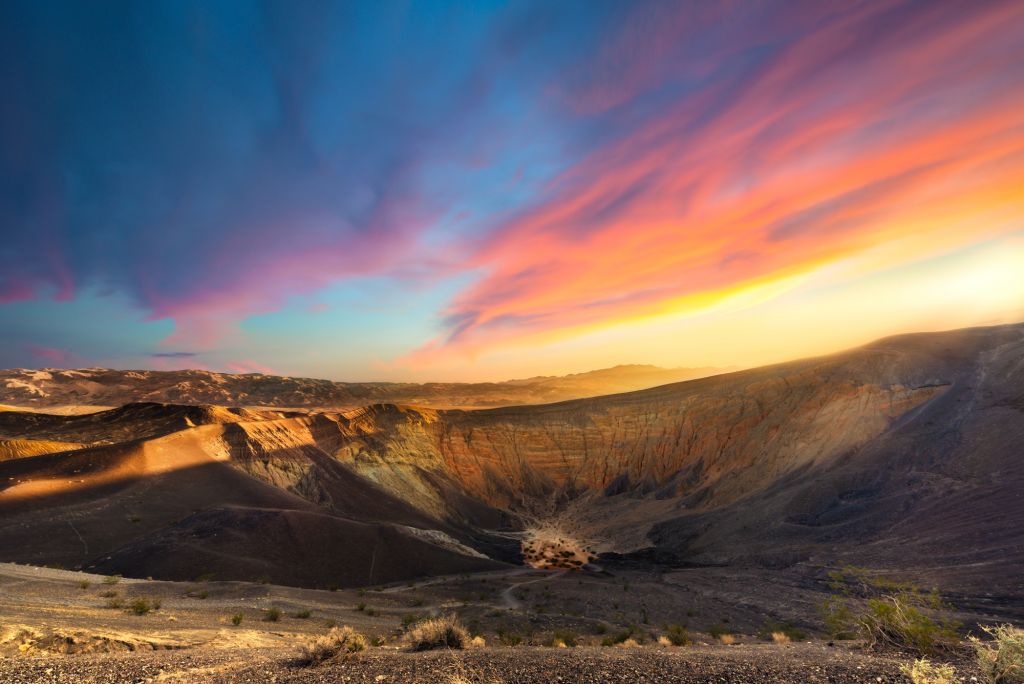
- Ubehebe Crater. An hour north. A half-mile-wide (800-meter) volcanic crater you can walk into. Less crowded than the southern park. Worth a half-day.
A Sample Four-Day Itinerary: Death Valley After a SoFi Match
If you came to LA for USA vs. Paraguay on June 12, here’s how the four days after the match could play out.
Day 1 — Saturday, June 13: Sleep in. Brunch in LA. Pick up your rental car. Drive out around noon. Take Highway 14 / U.S. 395 north through the Eastern Sierra and into the park via Lone Pine and Stovepipe Wells. Arrive at The Ranch at Death Valley by early evening. Check in. Walk to the saloon. Drinks under the date palms.
Day 2 — Sunday, June 14: Up at 5:00. Zabriskie Point for sunrise. Sand dunes by 7:00. Badwater Basin and Artist’s Drive on the way back. Back at the resort by 10:30. Pool, lunch, shade, repeat. Late afternoon: Dante’s View for sunset. Dark-sky walk after dinner.
Day 3 — Monday, June 15: Up at 5:00 again. Drive north to Ubehebe Crater and the Racetrack overlook. Back to The Ranch by lunch. Pool. Spa. Read on the terrace. Dinner at The Inn Dining Room. Stargazing.
Day 4 — Tuesday, June 16: Sunrise walk through the date palm gardens. Late breakfast. Drive out via Death Valley Junction toward Las Vegas. Stop at the Amargosa Opera House if it’s open. Lunch in Pahrump. Fly out of LAS that evening, or roll into Vegas for the watch party of whichever match is on.
Four days, two states, one valley, one match, and a different version of “the American West” than the one you came in with.
Booking Notes
Don’t miss insider travel tips:
- Book early. The 2026 World Cup window — mid-June through mid-July — will be a busy summer for U.S. national parks. Rooms at both The Inn and The Ranch will book up fast this summer. If you have your match tickets, you have your dates. Book the room.
- Rent a car. You’ll need one since there is no shuttle to Death Valley from any host city. Pick up your rental aat LAX or LAS depending on your route.
Fuel up before the park. Gas is available at The Ranch and at Stovepipe Wells, but is far more expensive inside the park. Pro tip: fill up in Pahrump (from Vegas) or Lone Pine (from LA). - Bring more water than you think. At minimin, bring a gallon (4 liters) per person per day, plus a refillable bottle. In Death Valley, this is not something to take lightly.
- Plan around the heat. Take advantage of cooler mornings, spring-fed pools in the afternoons, and skies filled with stars in the evenings— a perfect summer rhythm. We advise against hiking a canyon at 2:00 PM.
- Cell service is patchy. Though there is Wi-Fi at the resort, make sure to download maps before you arrive.
The Bigger Idea
Most fans coming to the 2026 World Cup will plan a trip around the match.
But the match is just ninety minutes. The trip can be much more than that!
Whether you’re flying in from São Paulo, Manchester, Tokyo, Buenos Aires, or Berlin — or driving from Phoenix or Portland — there is a version of this journey that lets you experienceone of the world’s most extraordinary sporting events and one of the world’s most extraordinary landscapes, all in a single itinerary without leaving the western U.S.
The drive may be long. The payoff is everything that comes after.
Pick a date. Plan the adventure.